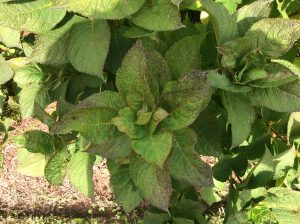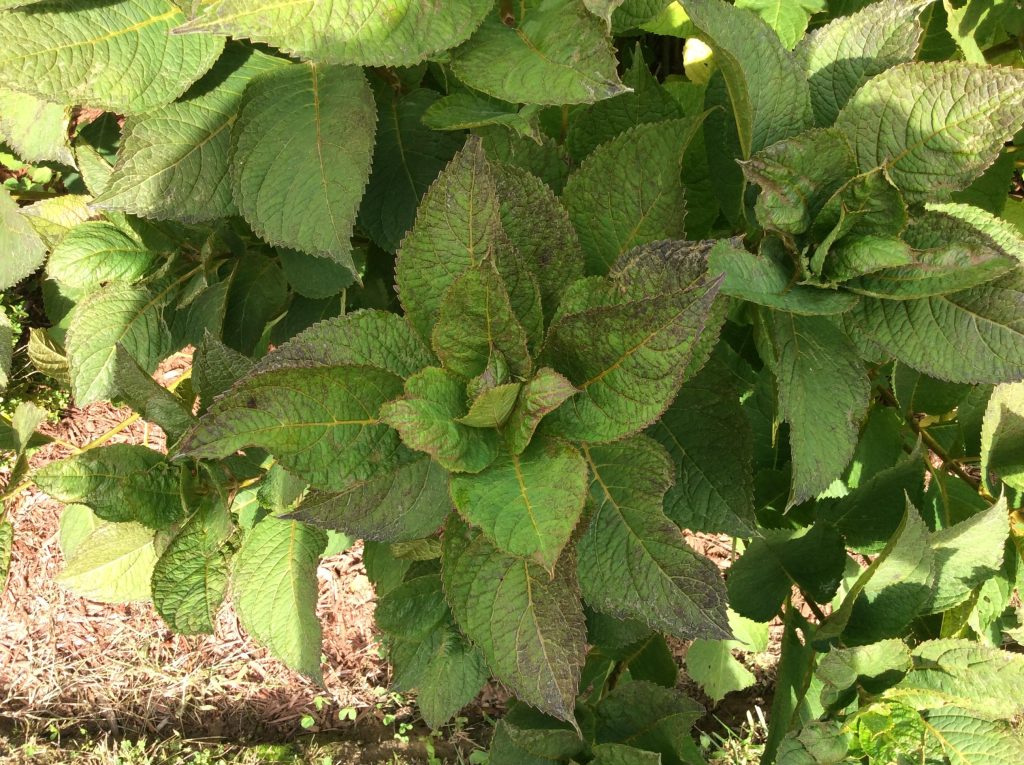
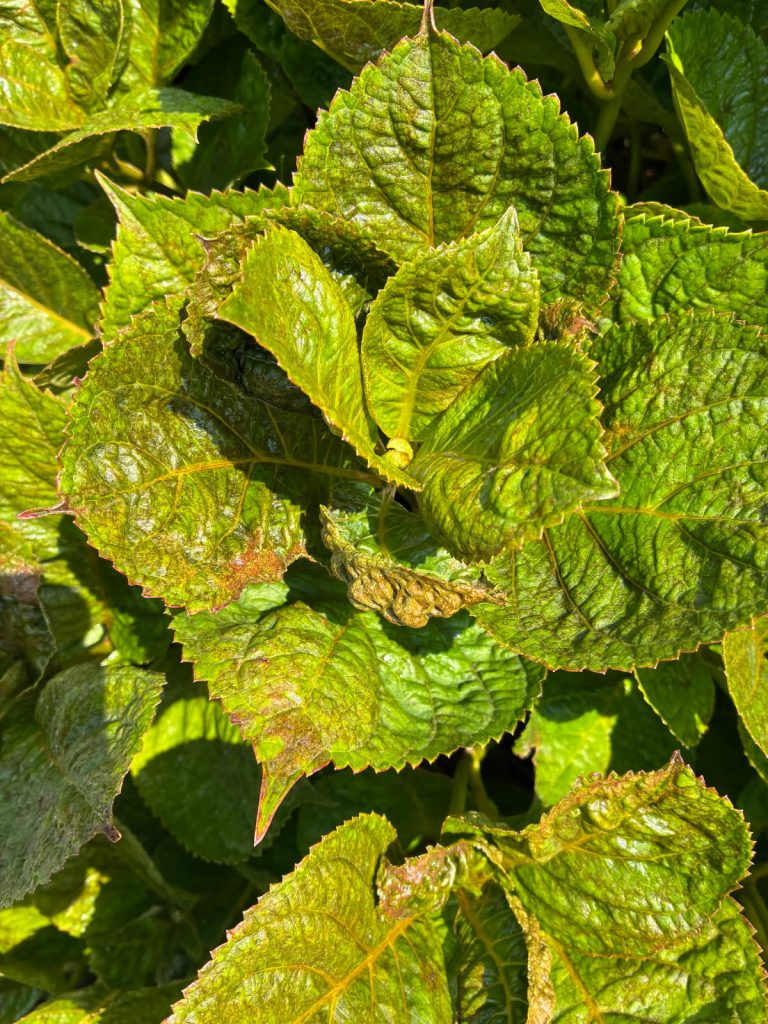
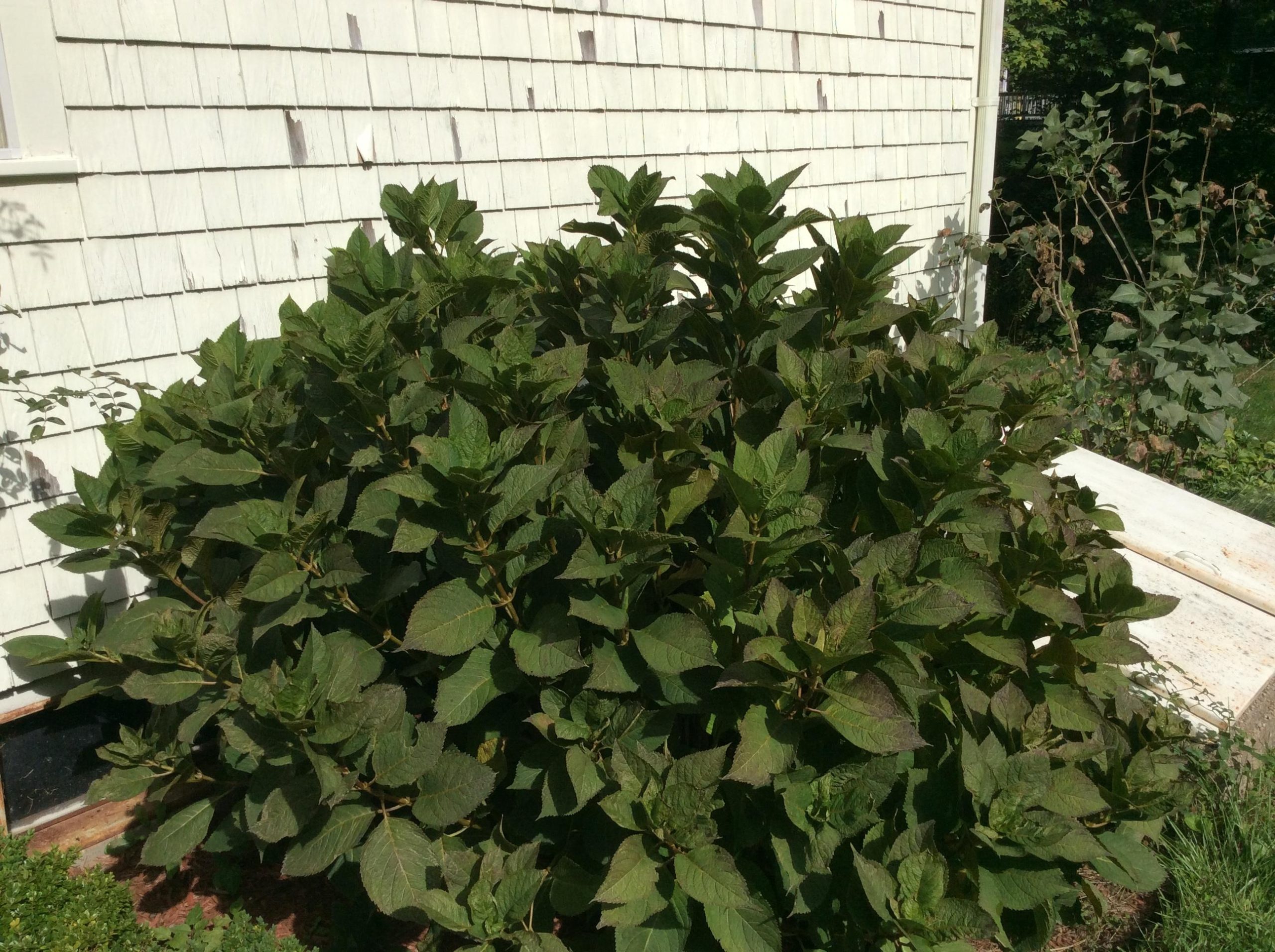
If the newest leaves on your hydrangeas suddenly look curled, bronzed, twisted, or just plain strange, there may be more going on than summer stress.
Chilli thrips damage is being reported on hydrangeas here on Cape Cod this season.
These tiny insects are generally less than 2 millimeters long and can be very difficult to identify without magnification. In most cases, homeowners and landscapers are much more likely to notice the damage they cause than the insect itself.
What do chilli thrips do to hydrangeas?
Chilli thrips prefer the tender parts of a plant, particularly new leaves, buds, and growing shoot tips.
As they feed, they damage developing plant tissue. Because that tissue is still growing, the symptoms can become increasingly noticeable as the leaf opens and expands.
You may notice:
- Curled, twisted, or misshapen new leaves
- Bronzed, silvery, reddish, or brown discoloration
- Stunted or distorted new growth
- Scarring or damaged areas on young leaves
- Damage to developing buds or flowers
One of the biggest clues is where the damage is occurring. With chilli thrips, the newest growth may look noticeably affected while older foliage farther down the plant still appears relatively normal.
Because chilli thrips are so small, proper identification generally requires magnification and a close inspection of symptomatic plant material.
Why are chilli thrips getting attention on the Cape?
Hydrangeas are one of the most recognizable plants in our Cape Cod landscape. From roadside plantings and cottage gardens to established landscapes throughout the Cape, their summer blooms have become an iconic part of our local scenery.
That connection is especially meaningful to us at Alfieri Tree Care. Through our past involvement with and sponsorship of the Cape Cod Hydrangea Festival, we have had the opportunity to celebrate just how important these plants are to local gardens and the character of Cape Cod landscapes.
That is also why emerging hydrangea pests deserve our attention.
Chilli thrips are not entirely new to the Cape. They were first confirmed in Massachusetts on hydrangeas in Barnstable County, and UMass Extension has again reported chilli thrips associated with hydrangeas in the Cape Cod region during the 2026 growing season.
[Read the September 4, 2026 UMass Extension Landscape Message →]
Don’t diagnose your hydrangea by the leaves alone
There is one important catch.
Distorted hydrangea growth does not automatically mean chilli thrips.
Broad mites can cause remarkably similar symptoms, and other plant health issues may also affect tender new growth.
The appearance of the leaves alone is not enough to confirm chilli thrips.
That is why we recommend identifying the cause before deciding how, or whether, to treat the plant.
Are hydrangeas the only plants chilli thrips can affect?
No. Chilli thrips can feed on a wide range of ornamental and landscape plants.
Here on Cape Cod, however, hydrangeas are particularly important to monitor because they are so widely planted and have been associated with documented chilli thrips activity in our region.
If unusual distortion or bronzing begins appearing on other plants in the landscape, those symptoms are also worth investigating rather than assuming they are caused by heat, drought, or another common seasonal stress.
Can chilli thrips be treated?
Yes.
Once chilli thrips are properly identified, several management options may be available. Depending on the plant, severity of the infestation, time of year, flowering stage, and other site conditions, management may include foliar applications, systemic or soil-applied treatments, monitoring, and appropriately timed follow-up visits.
Timing matters because chilli thrips concentrate their feeding on tender new growth and can produce multiple generations during the growing season.
Treatment also needs to take pollinators into consideration, particularly when hydrangeas or nearby plants are flowering. Our Plant Health Care team selects and times treatments according to the plant, pest, site conditions, and product label rather than taking a one-size-fits-all approach.
Will my hydrangea recover?
In many cases, yes.
Leaves that have already become distorted will not return to their original shape, so the goal is to stop or reduce continued feeding and protect the healthy growth that follows.
That is one reason early identification can be so helpful. Protecting developing foliage gives the plant a better opportunity to continue producing healthy new growth.

Frequently Asked Questions About Chilli Thrips on Hydrangeas
Chilli thrips are extremely small and difficult to identify without magnification. Most homeowners notice the symptoms on their plants long before they notice the insect itself.
Chilli thrips are one possible cause, but they are not the only one. Broad mites and other plant health problems can create very similar distortion in young hydrangea foliage. A closer inspection is needed to determine the actual cause.
The severity of an infestation can vary. Feeding can significantly damage and distort tender new growth, but affected hydrangeas can often continue producing healthy foliage once the pest pressure is brought under control.
Chilli thrips have been documented on hydrangeas in Barnstable County, and UMass Extension has reported activity associated with Cape Cod hydrangeas during the 2026 growing season.
UMass Extension has reported activity associated with Cape Cod hydrangeas during the 2026 growing season.
For those interested in learning more about identification, host plants, and management, UMass Extension also maintains a detailed chilli thrips fact sheet.
[UMass Extension Chilli Thrips Fact Sheet →]
Noticing unusual damage on your hydrangeas?
If the newest leaves on your hydrangeas are curling, bronzing, or coming in distorted, it is worth having them checked before the damage progresses.
Our Plant Health Care team can take a closer look, determine whether chilli thrips or another issue is responsible, and recommend the appropriate next step for your plants.
Have concerns about your hydrangeas? Contact Alfieri Tree Care to schedule a Plant Health Care visit or send us photos of what you are seeing. Early identification can make a meaningful difference when it comes to protecting healthy new growth and keeping one of Cape Cod’s most iconic landscape plants looking its best.