
Southern Pine Beetle Insect Control
Protect and Preserve the health of your trees
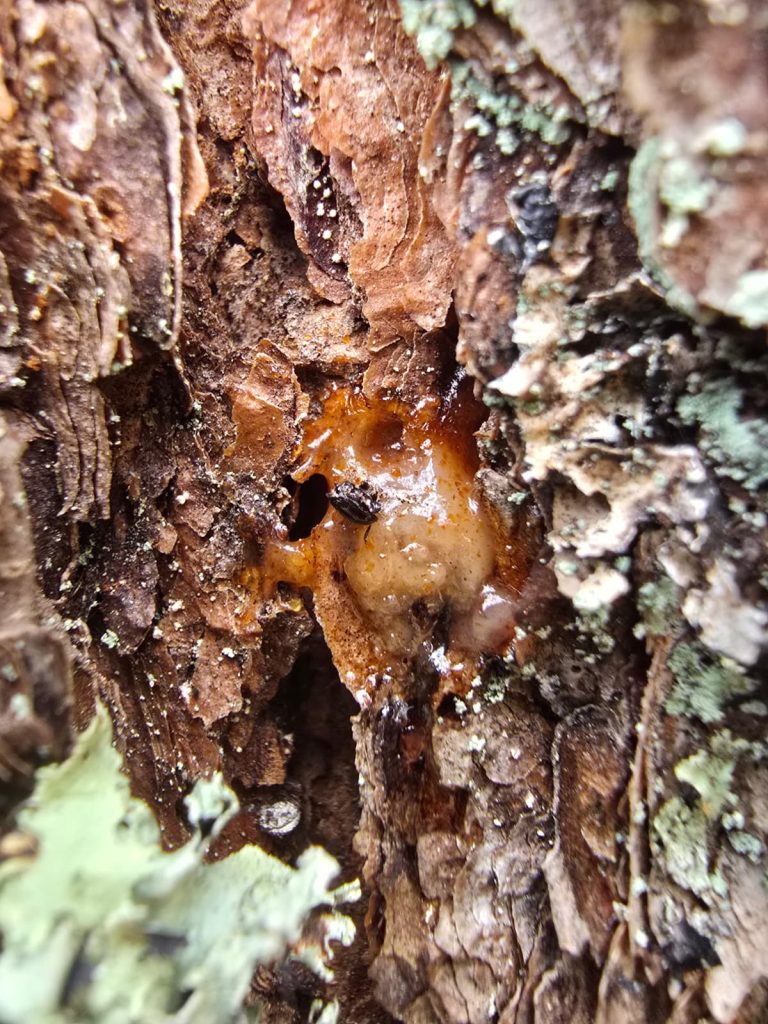
Southern Pine Beetle is an emerging threat to pine trees across Cape Cod, particularly in landscapes with pitch pine and grouped pine stands. Unlike some bark beetles that mainly target weakened trees, Southern Pine Beetles can overwhelm even relatively healthy pines when populations build. Once established, infestations can move quickly through nearby trees and lead to significant decline or mortality if not identified early.
At Alfieri Tree Care, we provide professional Southern Pine Beetle monitoring, diagnosis, and management recommendations for Cape Cod properties. Our approach is designed to protect high-value pines, reduce the likelihood of spread, and help property owners make informed decisions about treatment, monitoring, and removal when necessary.
Understanding Southern Pine Beetle
Southern Pine Beetle is a small bark beetle that attacks pine trees by tunneling through the bark and reproducing in the inner bark and vascular tissue. As beetle activity increases, the tree’s ability to move water and nutrients becomes compromised. Southern Pine Beetle is also associated with blue stain fungi, which can contribute to rapid decline.
On Cape Cod, pitch pine is the primary local host of concern. Red pine and Scotch pine may also be affected, and UMass notes that SPB has also been observed attacking eastern white pine and, in the Northeast, Norway spruce in some cases. This matters for Cape landscapes, conservation edges, and clustered residential pine stands where one infested tree can become the starting point for broader spread.
Our Comprehensive Control Strategies
Early Detection and Diagnosis
Our certified arborists assess pine health, site conditions, and visible signs of infestation to determine whether Southern Pine Beetle is the likely cause of decline. Proper identification is important because symptoms can overlap with Black Turpentine Beetle, Ips beetles, drought stress, and other pine health issues.
Monitoring and Property Assessment
For properties with mature pines or grouped plantings, periodic observation can make a major difference. We evaluate tree spacing, stand density, crown condition, and signs of active attack to help determine whether monitoring alone is appropriate or whether intervention should be considered.
Targeted Preventive Treatments
For select high-value specimen trees, preventive treatment may be considered based on site-specific evaluation. UMass notes that products containing permethrin, bifenthrin, or emamectin benzoate may be part of management in certain situations, though these options require proper timing, professional application, and careful consideration near aquatic environments.
Removal and Containment Planning
In some cases, removal of confirmed infested trees may help reduce spread to adjacent pines, especially where infestations begin in one tree and move outward through clustered stands. Early intervention can be especially important on larger residential properties, commercial sites, HOA landscapes, and conservation-edge properties with multiple pines in close proximity.
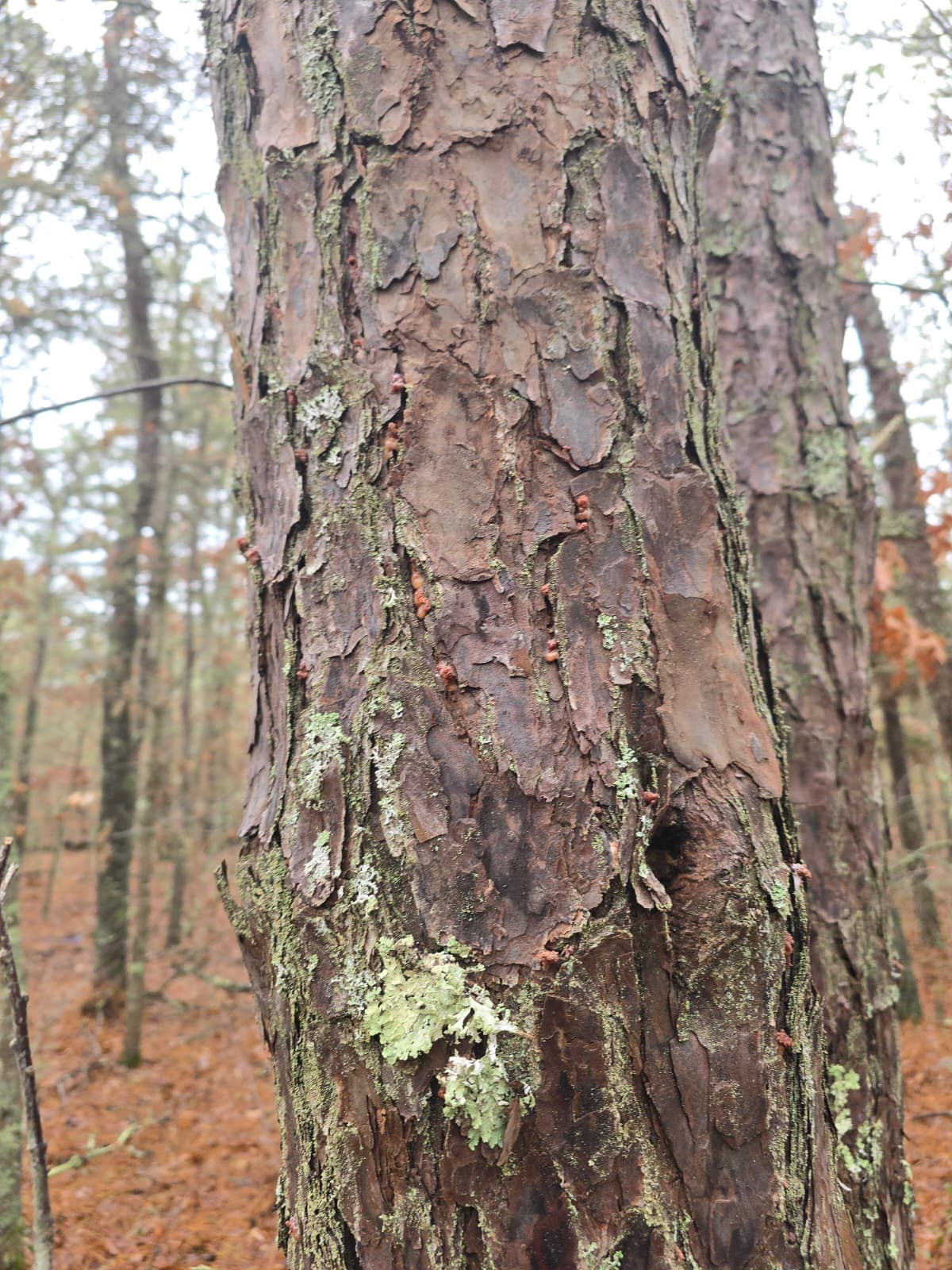


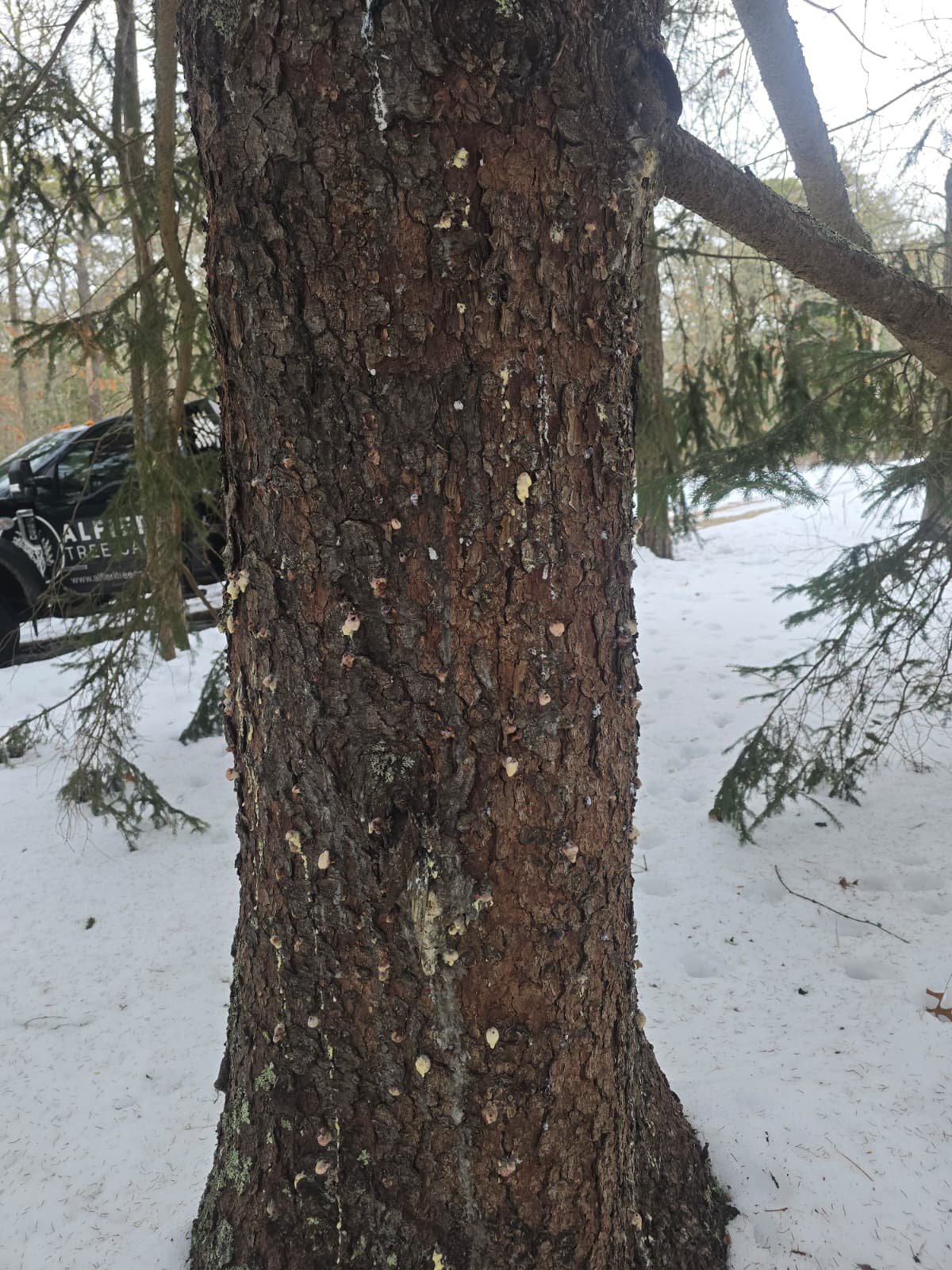
How can I tell if I have a Southern Pine Beetle infestation?
Recognizing the signs of Southern Pine Beetle early is important because decline can progress quickly once a tree is heavily attacked.
Some of the most common indicators include:
If you suspect a Southern Pine Beetle infestation:
Contact a Professional
Proper identification matters. Not every browning pine is Southern Pine Beetle, and not every affected tree requires the same response. A site visit can help determine whether the tree should be monitored, treated, reported, or removed.
Avoid DIY Treatments
Because Southern Pine Beetle spends most of its life stages protected beneath the bark, treatment is not as simple as a general spray application. Some management products are restricted use, require licensed applicators, and must be used with care to avoid non-target impacts.
Monitor Nearby Pines
Inspect surrounding pines for pitch tubes, fading crowns, and new signs of decline. On properties with grouped pines, early detection in adjacent trees can help limit broader damage.
Report Suspected Activity
Massachusetts encourages residents and property managers to report suspected Southern Pine Beetle activity. Reporting helps forestry officials track spread across southeastern Massachusetts and Cape Cod. Falmouth has also publicly asked residents to report suspected damage while local response systems continue to develop.
Southern Pine Beetle activity on Cape Cod is no longer theoretical. It is part of the region’s changing pine health picture, and early evaluation can provide more options and more controlled outcomes. If you are seeing unusual pitch tubes, browning needles, or general pine decline on your property, Alfieri Tree Care can help you determine the most appropriate next step.

Southern Pine Beetle FAQs
How to tell the difference between SPB and other borer beetles?
Southern Pine Beetle, Black Turpentine Beetle, and Ips engraver beetles can all cause pitch tubes, boring dust, exit holes, needle discoloration, and pine decline, so symptoms can overlap. One of the best clues is where the activity appears. Southern Pine Beetle often produces smaller, popcorn-like pitch tubes that may occur from the lower trunk up into the canopy, while Black Turpentine Beetle usually creates larger pitch tubes concentrated near the base and lower trunk. Ips beetles are often associated with stressed, storm-damaged, or recently cut pine material and may attack trunks, limbs, or upper portions of the tree.
Because these beetles can look similar from the ground, proper identification is important before deciding whether to monitor, treat, report, or remove a tree. A qualified arborist can evaluate pitch tube size and location, crown symptoms, nearby pine activity, and, when needed, gallery patterns beneath the bark. Learn more about the differences on our Black Turpentine Beetle page.
Can Southern Pine Beetle be treated after a tree is already infested?
In some cases, management may still be possible, but timing is important. Once Southern Pine Beetle is active beneath the bark and the tree is showing advanced decline, treatment options may be limited. A professional evaluation can help determine whether monitoring, preventative treatment for nearby pines, or removal of the affected tree is the most appropriate next step.
Should I remove every pine tree if Southern Pine Beetle is found on my property?
Not necessarily. The right response depends on the number of affected trees, the condition of nearby pines, tree spacing, site conditions, and the level of active infestation. Some trees may only need monitoring, while others may require removal to help reduce spread. Alfieri Tree Care can evaluate the property and recommend a plan based on the specific situation.
Are preventive treatments available for healthy pine trees?
Preventative treatments may be considered for select high-value pines, especially when nearby Southern Pine Beetle activity has been confirmed. These treatments require proper timing, professional application, and careful site evaluation. They are not a one-size-fits-all solution, but they may be a part of a broader management plan for important specimen trees
What should I do if I see pitch tubes or browning needles on my pine trees?
Contact a professional before assuming the cause. Pitch tubes, boring dust, and browning needles can be signs of Southern Pine Beetle, but they can also be related to other insects, drought stress, root issues, or general tree decline. Proper identification helps determine whether the tree should be monitored, treated, reported, or removed.
CONTACT US TODAY
Alfieri Tree Care is a locally owned and operated specialty tree and shrub care company ready to help you with your Insect + Disease control needs.
Our goal is to provide high-quality, safe, and environmentally conscious tree and shrub care to homeowners, condo associations, and businesses.