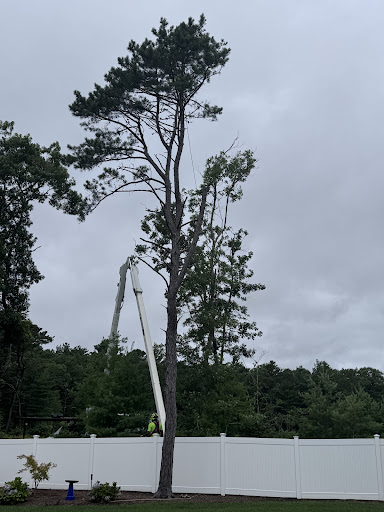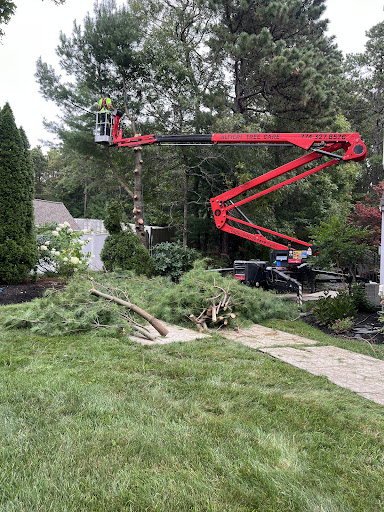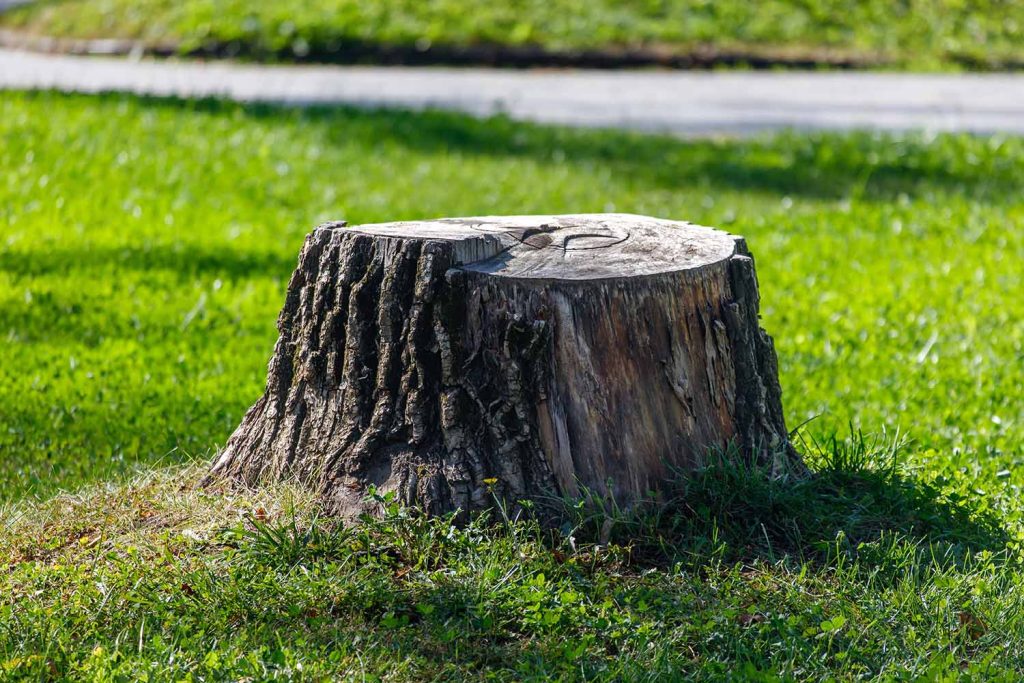
The tree is down, but the stump is still in the way. Whether it is interrupting your lawn, making mowing difficult, or taking up space you would like to replant, stump grinding helps you take the next step.
Alfieri Tree Care provides professional stump grinding for Cape Cod homeowners, condominium associations, businesses, and property managers. We can include grinding in your tree removal proposal or provide it as a separate service for stumps left from previous work.
Stump grinding uses specialized equipment to grind a tree stump below the surrounding ground level. It removes the visible stump and reduces the wood beneath it without excavating the entire root system.
Grinding can make mowing and maintenance easier, reduce tripping hazards, and create space for lawn repair or landscape improvements. The right grinding depth depends on what you plan to do with the area afterward.
We offer two grinding depths, measured below the surrounding grade, or ground level:
Let us know if you plan to plant in the same location, lower the grade, or install a walkway or other landscape feature. We can discuss the appropriate scope before work begins.
Extra-deep grinding does not remove the entire root system or automatically create a planting-ready space. Remaining roots, the size of the proposed planting, and site conditions may require additional preparation. Access, underground utilities, and nearby hardscaping can also affect the depth we can achieve.
Alfieri Tree Care can provide stump grinding for:
When appropriate, stump grinding can be discussed as part of a larger tree removal project. It may also be scheduled as a separate service for older stumps that were left behind from previous work.
We review the stump size and location, equipment access, surrounding landscape, and your plans for the area. Nearby structures, slopes, irrigation, underground lines, and hardscaping help determine how the work should be approached.
Your proposal will identify the grinding scope, selected depth, and whether optional cleanup is included.
Stump grinding is typically completed during a separate visit, usually 1 to 2 weeks after tree removal. Timing may vary with weather, property conditions, utility marking, and equipment scheduling.
Have an upcoming landscaping project? Tell us before scheduling so we can coordinate the work.
Alfieri Tree Care will contact DigSafe for utility marking before grinding.
Please notify us of any known underground lines near the work area, including private gas or electric lines, irrigation, landscape lighting, and other buried systems. Private utilities that are not marked through DigSafe may require a separate private locating service at additional cost.
If a marked underground utility is within 3 feet of the stump, additional excavation may be required and will be billed on a time and materials basis.
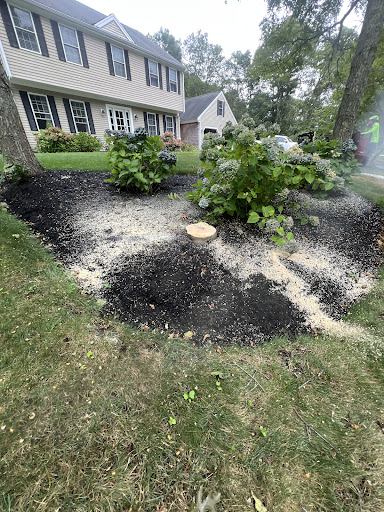
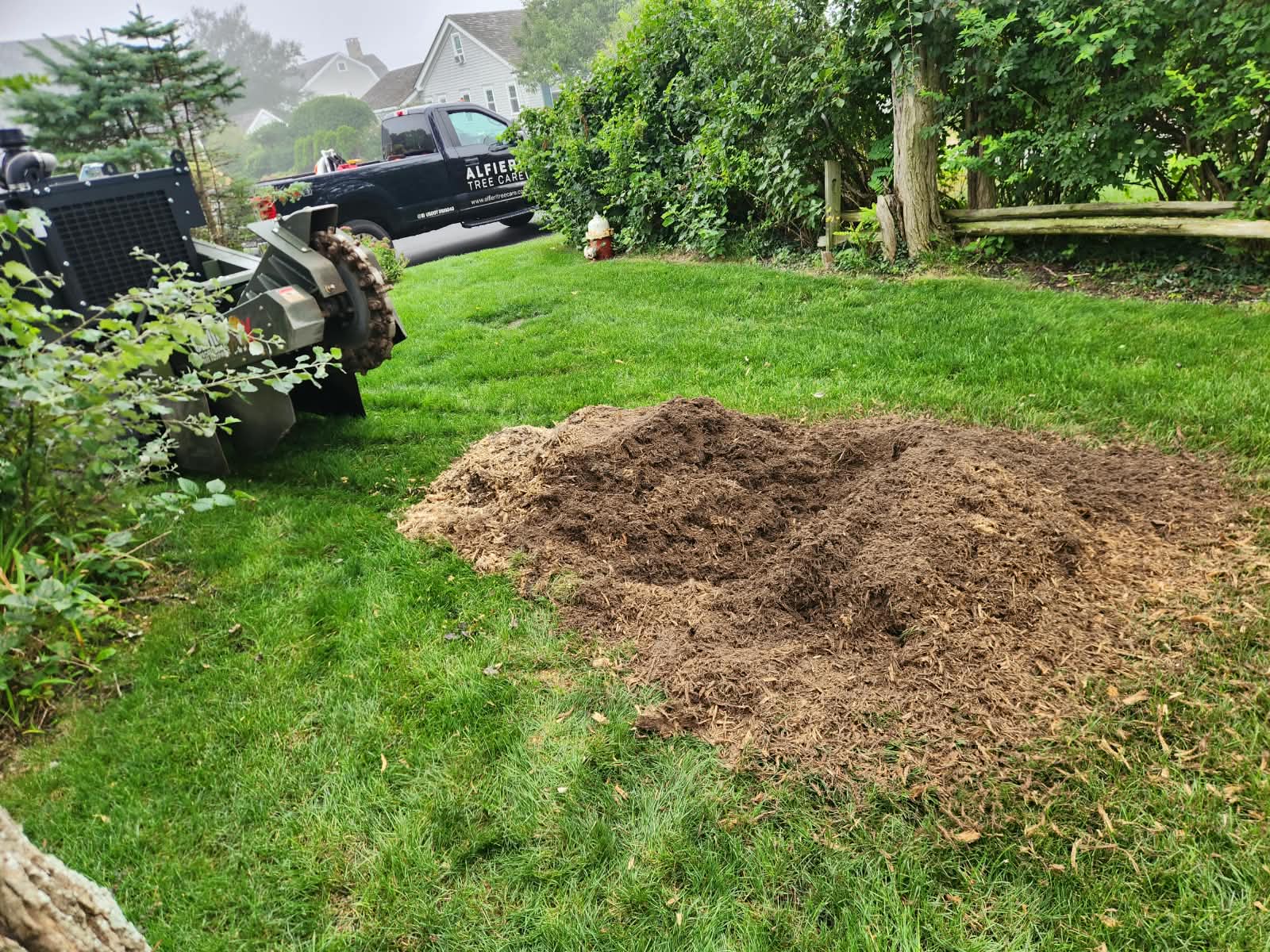
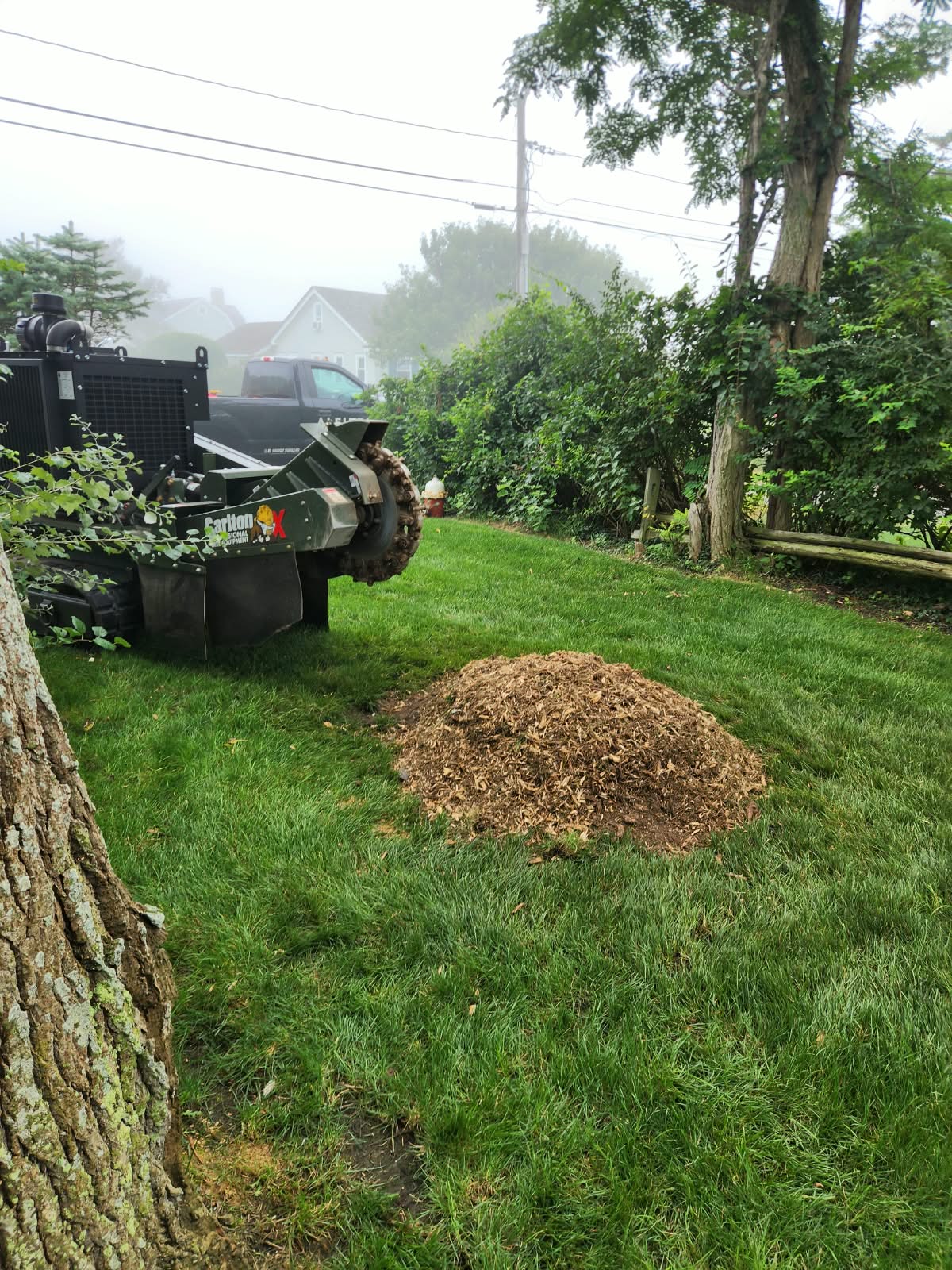
Our team grinds the stump to the agreed depth, subject to site conditions. The process generates a mixture of wood chips, soil, roots, and debris at the stump location.
All grindings and stump debris remain on site unless stump grinding cleanup is included separately in your proposal.
Grinding a stump and removing the resulting debris are separate services. If you would prefer to have the grindings hauled away, we offer stump grinding cleanup as an optional service at additional cost.
Cleanup includes:
Removal and off-site disposal of the grindings, chips, and debris generated by stump grinding.
Raking and rough grading of the disturbed area.
Cleanup may be completed during a separate visit from the grinding service.
Cleanup does not include loam, seed, sod, or final landscape restoration. Rough grading leaves the area ready for the next stage of preparation, rather than a finished lawn or planting bed.
Grinding a stump is often the first step toward restoring or reusing the space.
Tell us what you envision for the space before we grind. A lawn repair, new shrub, replacement tree, or grade change may call for a different approach.
Fresh stump grindings are not finished planting soil. Lawn repair or replanting may require removal of grindings, suitable soil, and additional preparation. We can explain the scope of our work so you or your landscaper can plan the next steps.
Stump grinding is a separate service and is included only when listed in your proposal. If you would like the stump ground after removal, let us know so we can include it in the scope.
Learn more about our tree removal services.
Yes. We can provide stump grinding for older stumps, including those left by another contractor, subject to equipment access and site conditions.
Grinding depth depends on the stump, the site, access, and the intended use of the area after grinding. We can discuss the appropriate depth during the evaluation and proposal process.
Standard grinding depth is 4-6 inches below grade, while “extra deep” is 8-10 inches below grade to allow for future replanting or grade change.
In many cases, grass is no issue, but the area will usually need preparation first. Wood chips and grindings may need to be removed or mixed with appropriate soil material before grass seed or sod is installed.
For replanting of another tree or shrub, it is a possibility, but extra-deep grinding alone does not guarantee enough space for a new tree. Let us know what you plan to plant so we can discuss the grinding depth and any additional preparation that may be needed.
Typically, no, our team will return at a later date, usually within 1-2 weeks to complete stump grinding
Generally, no. Stump grinding focuses on the stump and the area included in the agreed scope. It does not excavate the entire root system. If exposed roots are also affecting your lawn or landscape plans, point them out during the site review so we can discuss them separately.
If you have a stump left behind after tree removal or an older stump that is affecting the appearance and usability of your property, Alfieri Tree Care can help.
Our team provides professional stump grinding for Cape Cod properties with careful planning, proper equipment, and respect for the surrounding landscape.