People ask us all the time whether we’re “licensed and insured.”
Of course we are. But the more I hear that question, the more I think it’s actually a pretty bad way to judge a tree company.
Not because homeowners shouldn’t care. They absolutely should. Tree work is dangerous, expensive, and often happening around homes, vehicles, utilities, landscaping, and neighboring properties. The problem is that “licensed and insured” sounds much more specific than it really is.
Especially on Cape Cod, where there is no shortage of tree companies. You’ve got established national companies, small owner-operated teams, one-person operations, landscapers who also do tree work, guys with a truck and a chipper, and just about everything in between.
And almost everybody says they’re “licensed and insured.”
So what does that actually tell you?
Honestly, not as much as you might think.
Does Massachusetts require an arborist license?
No, not in the way most people probably assume.
Think about hiring a plumber or an electrician. In Massachusetts, both are regulated trades with established state licensing requirements. There are specific qualifications, examinations, and standards that professionals must meet to obtain the appropriate licenses. You can even look up their license status through the state.
Tree care is different.
Massachusetts does not have one general arborist or tree service license that someone needs in order to perform tree work. That means someone can advertise tree services, evaluate trees, recommend pruning or removals, and operate a tree care business without holding a state-issued arborist license.
So when a tree company says it’s “licensed,” the obvious next question is: licensed for what?
There are absolutely licenses that apply to different parts of tree care. Certain hoisting equipment requires properly licensed operators. Pesticide applications require the appropriate Massachusetts pesticide credentials. Commercial driving requirements may apply depending on the vehicles being operated.
Those things matter, but they’re not the same as having one blanket license that says a person is officially qualified to operate a tree service.
That distinction becomes even clearer when you look around New England. Connecticut, Maine, and Rhode Island all have actual state arborist licensing requirements in one form or another. Connecticut requires arborist licensing for people advertising, soliciting, or contracting to perform arboriculture. Maine requires licensing for people independently performing arborist services. Rhode Island also requires arborists to be licensed.
Massachusetts is different.
So if someone moves here from another New England state, or simply hears the phrase “licensed tree service,” it would be pretty reasonable for them to assume there’s a Massachusetts arborist license behind that phrase.
There isn’t.
Which is why “licensed for what?” is actually a very fair question.
What’s the difference between licensing and arborist certification?
A license and a certification are not the same thing.
An ISA Certified Arborist isn’t a state-licensed arborist. Neither is a Massachusetts Certified Arborist. Those are professional individual credentials, and they’re voluntary.
That’s actually part of why I think they matter.
Someone chose to put in the time, gain the experience, pass the testing, and keep up with continuing education. If I were hiring someone to evaluate a mature tree, diagnose a problem, recommend pruning, or tell me whether a tree should come down, I’d want to know there was real arboricultural knowledge behind that recommendation.
There’s a big difference between knowing how to cut a tree and knowing what should be cut in the first place.
What does “insured” mean for a tree service?
This is the part that drives me a little nuts, because “we’re insured” can mean a lot of different things.
What insurance? For how much? Is the policy current? Does it actually cover the work they’re doing? Do they have employees, and are those employees covered?
And this is important with tree work specifically: not every general liability policy covers every type of tree operation. Some policies have exclusions or limitations for work above a certain height, tree removal, crane or aerial-lift operations, or other higher-risk work. There isn’t one universal height limit, so simply seeing “general liability” on a certificate doesn’t necessarily tell you whether the work being proposed is actually covered.
General liability insurance and workers’ compensation insurance are also two different things. General liability generally addresses damage to someone else’s property, while workers’ compensation covers employees who are injured while working.
Tree care is an industry where both matter quite a bit.
So if a company shows you proof of general liability insurance, that’s a great start. But it still doesn’t tell you whether the people actually doing the work are employees covered by a workers’ comp policy, or whether the policy itself covers the type of tree work being proposed.

Should you ask a tree company for proof of insurance?
Yes. And it’s a completely normal request.
Ask for a Certificate of Insurance. We provide them all the time. Property managers ask for them. Condo associations ask for them. Towns ask for them. General contractors ask for them. Commercial clients ask for them.
Homeowners can ask too.
Take a minute and actually look at it. Make sure the company name matches the business you’re hiring, check the policy dates, look at the types of coverage listed and the limits, and if the company has employees, look for workers’ compensation coverage.
For a larger project, you can even ask for the certificate to come directly from the company’s insurance agent.
Nobody running a legitimate business should be offended by that question.
How do you compare tree companies on Cape Cod?
This is really where “licensed and insured” stops being enough.
There are a lot of tree companies working on Cape Cod, and that’s not a bad thing. There are some fantastic companies here, including plenty of smaller businesses doing solid work.
But when homeowners have a lot of choices, it’s easy to compare companies based on the simplest things. Who answered first. Who can come tomorrow. Who gave the lowest price. Who has the nicest truck. Who says they’re licensed and insured.
None of those things, by themselves, tell you much about how the work is actually going to be handled. I’d want to know a little more about who evaluated the trees, what’s actually included in the scope, what insurance the company carries, and who will be responsible for the work once the crew arrives.
And if something changes once the crew is on site or up in the tree, is there someone qualified to make that call?
That’s where the differences between companies start becoming much clearer.
Does every tree crew member need to be certified?
No, and I think this is another place where people can get the wrong idea.
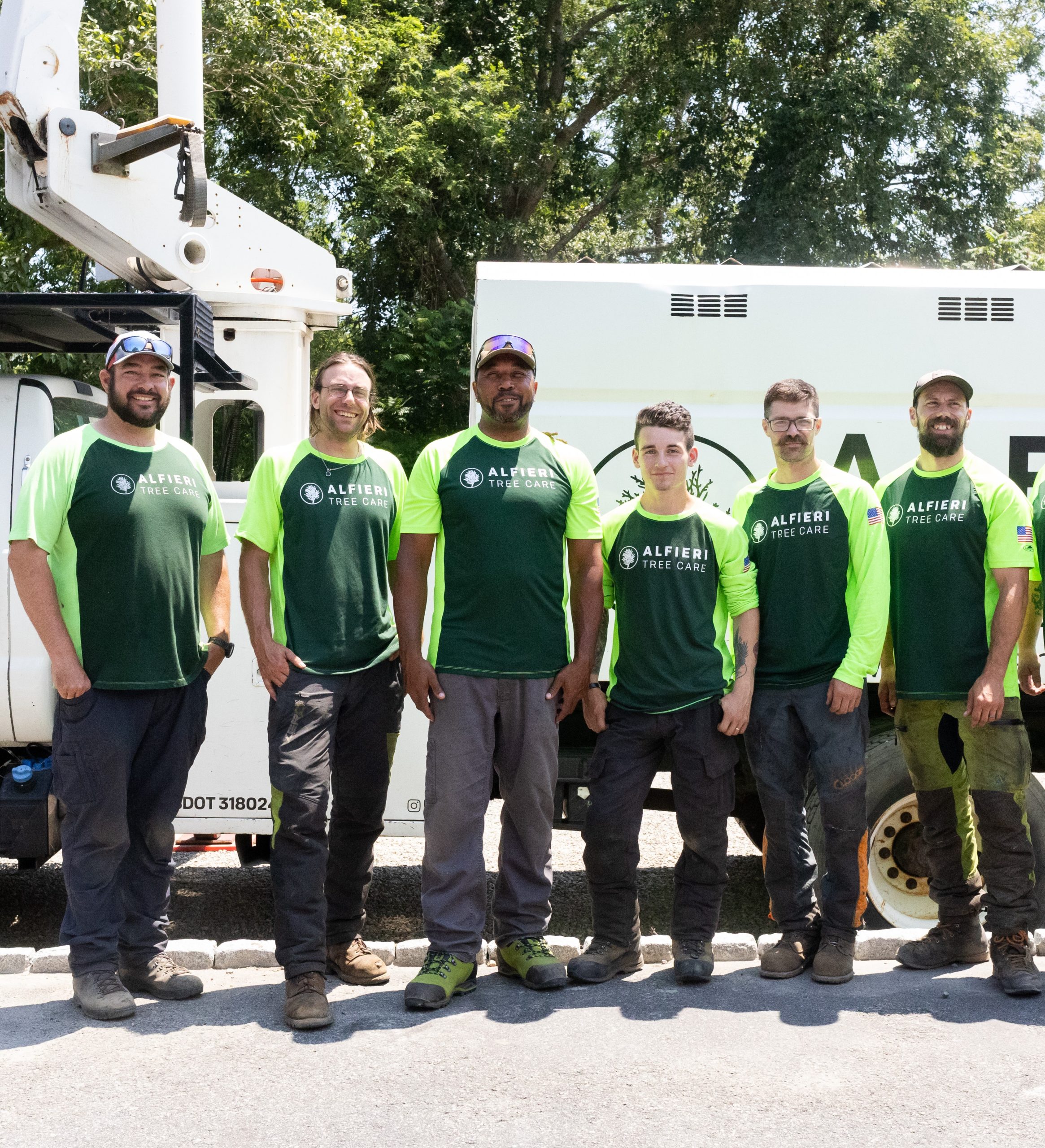
A tree company may have Certified Arborists on staff, but that doesn’t mean every ground crew member, climber, equipment operator, and apprentice needs to hold the exact same credentials.
That’s not really how a good tree care company works. It’s a team.
What matters is that qualified people are involved where their knowledge and credentials are needed. Someone should be qualified to evaluate the tree and develop the recommendation. The crew should understand the scope and the objective. The right people should be supervising the work. And when a task requires a specific license, the person performing that work needs to hold the appropriate credential.
The goal isn’t for every employee to collect every possible certification. It’s to have the right combination of training, experience, licenses, credentials, and oversight in place for the work being performed.
Do you need a permit for tree work on Cape Cod?
Sometimes the hardest part of a tree job isn’t cutting the tree. It’s figuring out whether you can cut it in the first place.
That doesn’t mean every tree project needs a permit, but depending on where the tree is located, other rules can come into play. Public shade trees may fall under the authority of the local Tree Warden. Work near wetlands, coastal resource areas, ponds, marshes, and other protected areas may require involvement from the local Conservation Commission. Local bylaws can matter too.
A company working regularly on Cape Cod should at least recognize when a project raises those questions and know when it’s time to stop and get clarification before work begins.
You really don’t want the first conversation about Conservation or a Tree Warden happening after the tree is already on the ground.
Why are tree service quotes so different?
Getting multiple quotes is smart, especially if it’s a sizable project or you’re hiring a tree company for the first time. But at some point, more quotes don’t necessarily give you better information. For most tree work, three solid estimates from reputable companies should give you a pretty good sense of the range and, just as importantly, let you compare how each company approaches the work.
There are plenty of perfectly legitimate reasons one company’s price might be lower than another’s. Maybe they use different equipment. Maybe they run a smaller crew. Maybe their overhead is lower. Maybe the scope isn’t exactly the same.
That’s why I don’t think homeowners should assume the highest quote is automatically coming from the most reputable company either.
But running a legitimate tree care company is expensive. Insurance is expensive. Workers’ compensation is expensive. Equipment, maintenance, training, skilled employees, and continuing education all cost money.
So if one quote comes in dramatically lower than the others, it’s worth slowing down and figuring out what you’re actually comparing.
Read the scope. Ask what’s included and what isn’t. Ask a few questions about the company itself.
The cheapest number on the page isn’t always the same job for less money. Sometimes it’s a different job entirely.

What does “licensed and insured” mean at Alfieri Tree Care?
For ATC, it means carrying the insurance appropriate for the work we do, with employees, vehicles, equipment, and crews working on client properties every day. It also means making sure regulated equipment is operated by properly licensed employees and that our plant health care services are performed under the appropriate Massachusetts pesticide credentials.
Beyond licensing and insurance, we also maintain professional arboricultural credentials and invest in ongoing training and continuing education.
That’s really the point of this whole conversation. “Licensed and insured” is useful shorthand, but it doesn’t tell you everything about a tree company.
So when you’re comparing tree companies on Cape Cod and someone tells you they’re licensed and insured, there’s nothing wrong with asking one more question:
“Great. What does that mean for your company?”
The answer will probably tell you a lot more than the phrase ever did.
If you’re considering tree work on Cape Cod and have questions about what to look for in a tree company, feel free to reach out. We’re happy to talk through it, even if you’re still in the information-gathering stage.