Boxwoods have earned their place in Cape Cod gardens. They frame a front walk beautifully, bring structure to flower beds, and keep things green when the hydrangeas have called it a season.
They also have a reputation for being dependable. Plant them, keep them reasonably tidy, and enjoy that classic green border. At least, that’s the arrangement most homeowners thought they were getting.
Lately, boxwoods have been asking for a little more attention.
Box tree moth has joined leafminer, blight, and the usual weather and growing-condition troubles, making that once-simple hedge a more involved commitment. If yours is looking rough, the question is: what’s going on, and what will it take to keep it healthy?
What is box tree moth, and why is it damaging Cape Cod boxwoods?
Box tree moth (Cydalima perspectalis) is an invasive insect native to parts of Asia with a particular appetite for boxwoods. Like many of its nibbly relatives (we’re looking at you, winter moth and spongy moth), the caterpillars are the damaging stage.
The adult moths might catch your eye fluttering around the garden, but their hungry offspring are the ones working their way through your hedge. They feed among the foliage, often tucked inside the shrub where you’re unlikely to notice them during your usual walk to the mailbox.
First detected in Massachusetts on Cape Cod in 2023, this insect has made itself quite comfortable in local boxwood plantings. Unfortunately, its preferred meal is the hedge you’ve spent years growing. And with multiple generations possible during the growing season, feeding can continue well beyond a single spring outbreak.
That’s what makes regular inspection so important: an established boxwood install that looked fine a few weeks ago, may deserve another look today.
What does box tree moth damage look like?
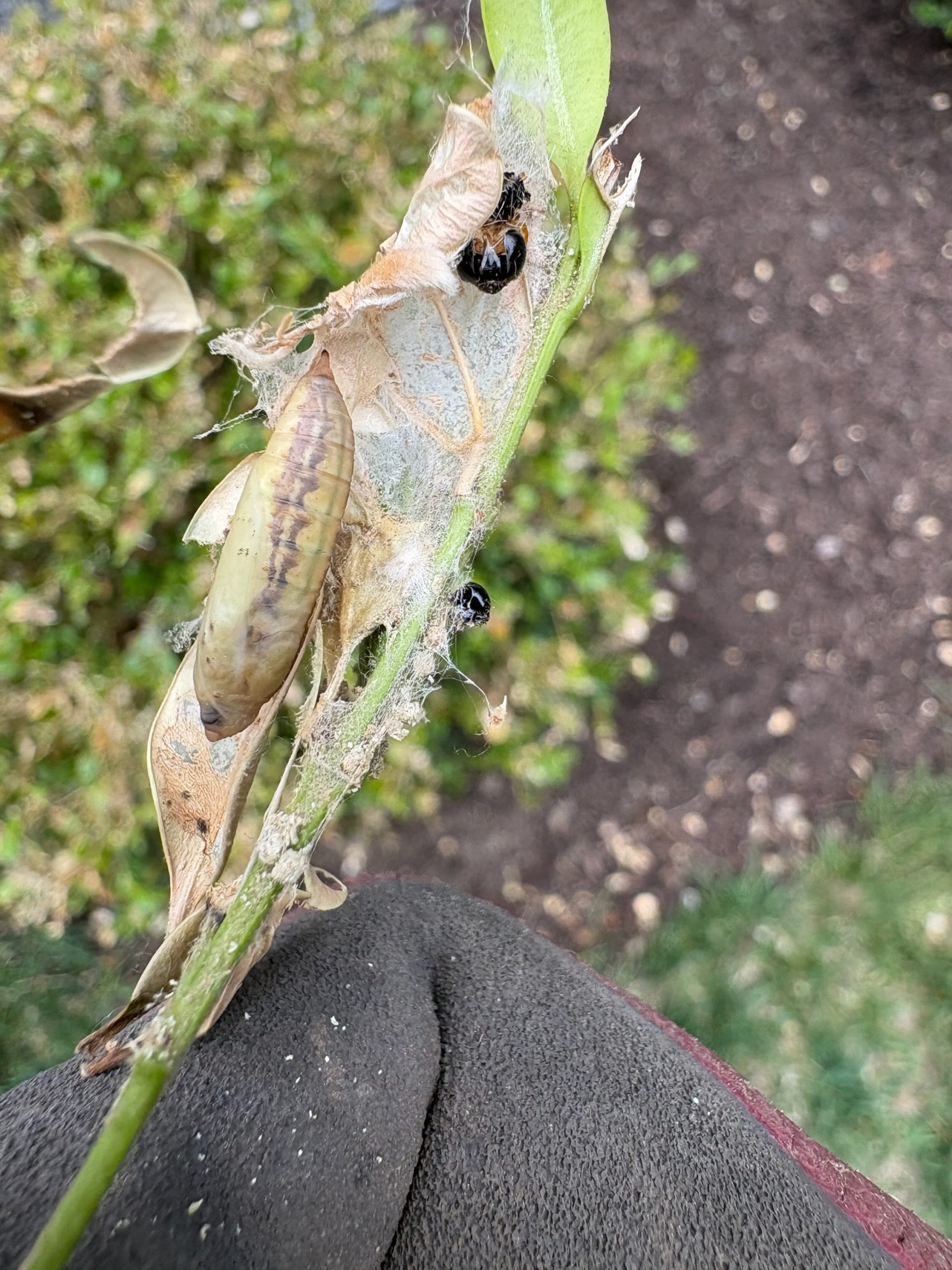
Young caterpillars start on the undersides of leaves, where their feeding is easy to miss. As they grow, their appetites grow with them. Leaves can be reduced to little more than veins, and heavy infestations may go on to damage bark once the foliage has been consumed.
This is why a quick glance from the driveway doesn’t tell the whole story. Part the branches and look inside for:
- Chewed leaves, missing foliage, or thin leaf remnants.
- Silk webbing tucked among the branches.
- Small, dark pellets of frass (the polite horticultural term for insect poop.)
- Green caterpillars with dark stripes and spots.
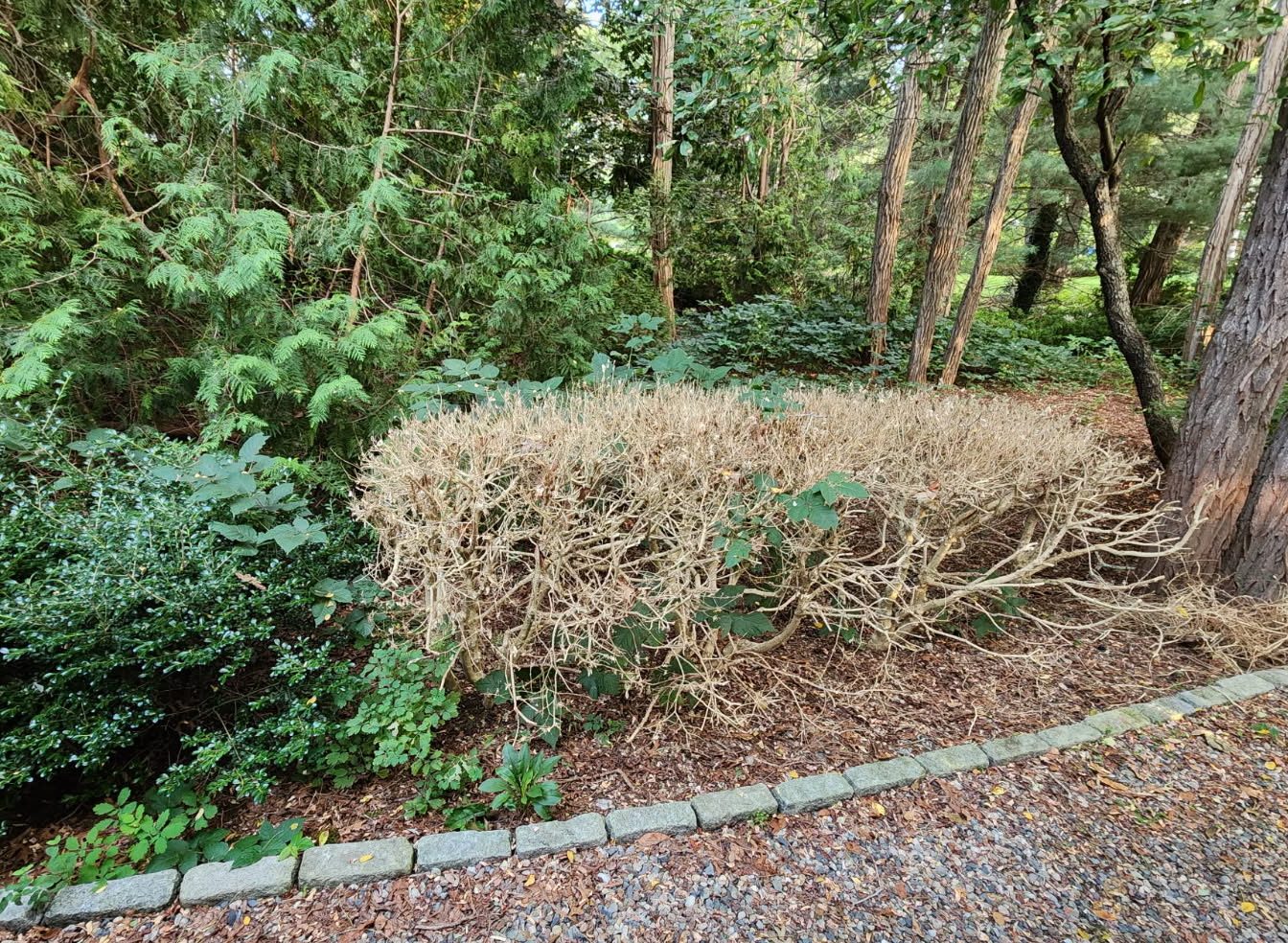
- Sections that look unusually thin, brown, or scorched.
The outside may still look respectable while the interior is being eaten. By the time the whole shrub looks brown, there may already be substantial damage.
How do you treat box tree moth?
There are effective treatment options, and catching an infestation early gives you more opportunity to protect the foliage that remains.
Bt, short for Bacillus thuringiensis, is one option for young caterpillars. Other labeled insecticides may be appropriate as caterpillars get larger or when feeding is more extensive.
Foliar treatments need to reach where the caterpillars are feeding. A light spray across the outside of a dense hedge may leave sheltered insects inside untouched. Thorough coverage matters.
Certain systemic treatments may also be an option. These are absorbed by the plant’s vascular system, but the product, application method, and timing must suit the pest and planting. We select treatments using current Massachusetts registrations and product labels.
And then there’s the follow-up. Box tree moth can produce overlapping generations during the growing season, so a successful treatment doesn’t mean you can stop checking until next spring. Hand-picking may help with a very small infestation, but it is a bigger undertaking once caterpillars are scattered through a long, dense hedge.
The goal is to interrupt the feeding and protect the plant. Regrowth and recovery are a separate part of the conversation.
Why are my boxwoods turning brown?
A brown boxwood isn’t a diagnosis. Several problems can look similar from a distance, and treating the wrong one costs time while the actual issue continues.

Boxwood blight
Blight is a fungal disease that can cause leaf spots, rapid leaf drop, and narrow black streaks on green stems. Those stem markings are useful clues, though testing may be needed to confirm what’s happening.
This is where we need to be realistic about treatment. Fungicides may help suppress disease in certain situations, but they do not eradicate it. Sanitation, careful handling, and removal of infected material matter, and replacement may be the sensible choice for badly affected plantings.
Boxwood leafminer
Leafminers take a different approach to dinner: their larvae feed inside the leaves, between the upper and lower surfaces. The result is blotchy, blistered foliage rather than the chewed remnants associated with box tree moth.
Depending on the infestation, management may include removing affected foliage or a carefully timed insecticide, including an appropriate systemic treatment. Timing follows the insect’s development, so the right treatment at the wrong time can disappoint.
Psyllids and mites
Psyllids cause cupped new leaves and leave white, waxy material behind. They can make a tidy shrub look less tidy, but their damage is usually cosmetic. Sometimes monitoring is enough. When treatment is warranted, pruning or a labeled horticultural oil or insecticidal soap may be appropriate.
Mites cause fine pale speckling and a dull appearance. They may also warrant treatment when populations are significant, but a product selected for another pest isn’t automatically the right choice.
Volutella and growing conditions
Volutella can cause branch dieback and straw-colored foliage. Removing affected branches when dry, clearing accumulated dead leaves, and thinning for better airflow can help.
Then there are the less exotic problems: winter drying, drought, poor drainage, and planting too deeply. These can leave boxwoods struggling too.
More fertilizer isn’t automatically the answer. Neither is another insect treatment. If roots are sitting in wet soil or the plant isn’t receiving adequate water, those conditions need attention first.
What can gardeners do to help protect their boxwoods?
You don’t need to identify every insect in the garden, but getting familiar with your boxwoods can help you catch changes early. A few minutes looking inside the hedge will tell you more than admiring it from the driveway.
- Check regularly during the growing season.
Gently part the branches and look for fresh chewing, caterpillars, webbing, and droppings. Take photos of anything suspicious so you can compare changes or ask for help. - Water the soil, rather than the foliage.
Check soil moisture before watering. Boxwoods need adequate moisture, but soggy roots and leaves kept wet by sprinklers can create other problems. - Go easy on the mulch and fertilizer.
Keep mulch light and away from stems. Browning foliage isn’t automatically a nutrient deficiency, so resist giving a struggling shrub an extra helping of fertilizer without understanding the cause. - Be thoughtful about pruning.
Selective thinning can improve airflow inside dense plants. If you suspect blight, get guidance before trimming your way down the entire hedge and potentially spreading disease. - Match any treatment to the actual pest.
A product for leafminer isn’t automatically suitable for box tree moth or mites. If treating plants yourself, use a product registered for the intended use in Massachusetts and follow all label directions, including precautions for pollinators.
For a small, confirmed box tree moth infestation, removing caterpillars by hand and dropping them into soapy water may help. Be thorough, though: they’re good at hiding, and picking off a few visible caterpillars doesn’t mean the shrub is clear. Avoid moving infested plants or loose clippings elsewhere.
If feeding is widespread, damage keeps returning, or you’re unsure what you’re looking at, get an assessment before reaching for another treatment.
A little detective work now can save you money and give your plants a better chance.
Can my boxwoods recover, or should I replace them?
If you’ve spent years growing a hedge, pulling it out is a big decision. We understand wanting to give it a chance.
For plants with a reasonable amount of healthy structure remaining, treatment may be worth pursuing. For a planting with extensive dieback, repeated problems, or a location that never suited it, we should also talk about replacement.
The useful question is, “What can we reasonably expect this boxwood planting to look like, and what care will it need to get there?”
That conversation should include the likely recovery, ongoing maintenance, and cost. You deserve a recommendation that makes sense for the landscape and for you.
If removal is the best option, infested material needs careful handling. UMass advises bagging it and safeguarding it on site while arranging appropriate disposal. Moving infested shrubs or loose clippings elsewhere can spread the insect.
What can I plant instead of boxwood on Cape Cod?
You can keep structure and greenery in the garden without planting another row of boxwoods. These are some boxwood alternatives worth a closer look.
Inkberry holly (Ilex glabra)
For a native evergreen with small leaves, inkberry is a great place to start. Cape Cod Cooperative Extension lists it as a locally adapted alternative. Compact selections such as ‘Gem Box’ offer a smaller habit suitable for modest planting spaces.
It’s worth considering when you want a familiar green backdrop while changing the plant behind it.
Japanese holly (Ilex crenata)
If you love the look of a formal hedge, Japanese holly deserves a look. Its small, dark leaves and tolerance for shaping make it a useful candidate. Choose the cultivar around the size you actually need, rather than planning to prune an oversized shrub into submission.
Dwarf Hinoki cypress (Chamaecyparis obtusa)
A dwarf Hinoki brings evergreen structure with a different texture. Selections such as ‘Nana Gracilis’ have an irregular rounded form that suits a more natural design. It’s a good option when replacement is also an opportunity to change the look of the bed.
Bayberry (Morella pensylvanica)
For a looser coastal planting, native bayberry is worth considering, especially where salt exposure is a concern. It won’t give you the same clipped border as boxwood, and foliage retention can vary in cold winters. Give it a role that suits its natural form.
With any replacement, we start with the site: sunlight, soil, drainage, exposure, and room to grow. A beautiful plant on the nursery bench still needs the right home.
When should I call a professional about my boxwoods?
You don’t need to know whether you’re looking at moth damage, leafminer, or blight before you call. That’s part of what we’re here for.
Alfieri Tree Care can assess your boxwoods, explain what’s affecting them, and help you weigh treatment against replacement. If there’s a worthwhile path to keeping your hedge, we’ll talk through it. If it’s time for something different, we can help with that conversation too.
Contact Alfieri Tree Care to schedule a Plant Health Care assessment for your Cape Cod property.